


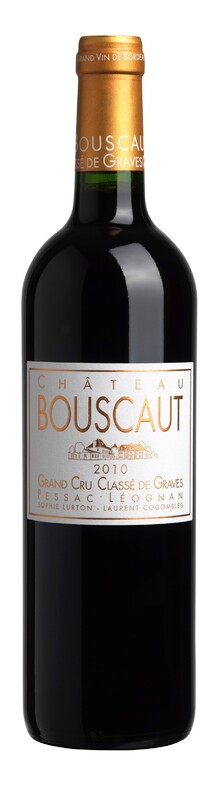
CHÂTEAU BOUSCAUT
Pessac-Léognan Grand cru classé
2009
About this winery
History Bouscaut’s vineyard has been in existence since the 17th century on the Cadaujac commune, in the Pessac-Léognan AOC, formerly called Graves. The Chabanneaux family bought the property at the end of the 19th century. The name Bouscaut (named after the place) appeared under their aegis towards 1881, replacing the name Haut Truchon. The various owners throughout the twentieth century were very dedicated to improving and transforming both the vineyard and the château. The neighbouring...
See the CHÂTEAU BOUSCAUT detail page for more information on this brand
Product notes
History
The Chabanneaux family bought the property at the end of the 19th century. The name Bouscaut (named after the place) appeared under their aegis towards 1881, replacing the name Haut Truchon. In 1925, Victor Place and the Count of Rivaud took ownership and restored some lost luster. In early 1960, the château was completely destroyed by a fire. In 1968, they ceded ownership to a group of New York investors who assigned the management of the vineyard to Haut-Brion superintendents. Finally, in 1979, Bouscaut was acquired by Lucien Lurton. Today the fourth generation, in the form of Sophie Lurton, Lucien’s daughter, is in charge. She inherited the estate in 1992. Since then, Sophie and her husband Laurent Cogombles work hard on extracting the best of this unique terroir.
Terroir
The Bouscaut terroir is mainly made up of clayey-gravelly soils, on a calcareous base. The clayey-gravelly soil being the major component of Château Bouscaut’s terroir, gives the white wines a beautiful silky texture as well as a very expressive aromatic nature to both the Sauvignon Blanc and the Sémillon. This terroir also provides the white wines with outstanding aging potential, with the older wines evolving towards floral, dried fruit aromas with a smoky character… These same soils also produce excellent red wines, being particularly well adapted to Merlot. The resulting wines are deep in colour and particularly rich and powerful with good tannins.
Production notes
Once harvested, the white grapes are pressed and they macerate for 24 to 48 hours. The juice as well as part of the lees is then transferred into new oak (50%) or one-year-old barrels. Each named parcel (cerisier, portail, pièce blanche, etc.) are aged separately until the final blending. The alcoholic fermentation is done in barrels.