


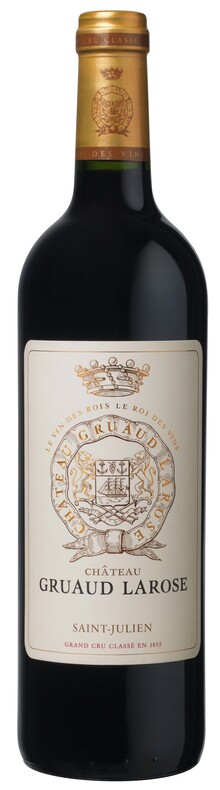
CHÂTEAU GRUAUD-LAROSE
Saint-Julien Grand cru classé
2011
About this winery
History L’Abbé Gruaud, worthy representative of the Noblesse de Robe, which typified the Pre-Revolutionary Ancien Régime of France, initiated the story of the château in 1725. Thanks to the family of Joseph-Sébastien de Larose, son-in-law and heir of L’Abbé Gruaud, the wine not only made a reputation but also made a name for itself: Gruaud-Larose. It has belonged to the Merlaut family since 1997. Château Gruaud-Larose is one the most historic estates in the Médoc. Its size has hardly...
See the CHÂTEAU GRUAUD-LAROSE detail page for more information on this brand
Product notes
History
L’Abbé Gruaud, worthy representative of the Noblesse de Robe, which typified the Pre-Revolutionary Ancien Régime of France, initiated the story of the château in 1725. Thanks to the family of Joseph-Sébastien de Larose, son-in-law and heir of L’Abbé Gruaud, the wine not only made a reputation but also made a name for itself: Gruaud-Larose. It has belonged to the Merlaut family since 1997. Château Gruaud-Larose is one the most historic estates in the Médoc. Its size has hardly changed through the centuries and it now deserves its second growth status in the 1855 classification more than ever. Year after year, each vintage shows that Gruaud stands for the expression of the soil, the tannins and the terroir, and that Larose evokes poetry, aromas and bouquet.
Terroir
The Gruaud-Larose terroir is truly remarkable and unique. It is a single vineyard of 80 hectares with gravels from the Gironde estuary, dating from the Mindel I and Mindel II (about 700,000 years ago), and that in some places are over 18 feet deep. The soil is very poor and sandy, and therefore does not hold water. Drainage is one of the major concerns of a conscientious vine-grower. It is also an important factor at Gruaud-Larose where nineteenth-century underground pottery drains have been found. The natural draining system is due to the poor quality of soils, and to the hot and dry summers.
Production notes
We adopted an integrated pest management system in the vineyard that uses organic methods such as organic farming compost and seaweeds. Debudding, crown suckering, leafing and thinning are done during the vegetative cycle. Grapes are hand-harvested and fermented in vats. The wine is aged for 16 months in barrels (50% new).
Tasting notes
The wine displays a bright garnet color with delicate purple highlights. The very complex and intense nose opens on elegant, exotic wood notes reminiscent of sandalwood, as well as notes of vanilla, spices, coffee, piquillos, and ends on notes of blackcurrant jelly. Even though woody tannins are dominating for now due to its youth, the wine is delicious. The palate offers notes of ripe fruits, dark chocolate and mocha. This rich, powerful, and beautifully-balanced wine shows elegance and refinement.